

Open Ceramics: Processing and oxidation response of Cr2AlCMAX phase composites containing ceramic fibers
1. Article overview
The MAX phase is a relatively new material family with more than 150 different compositions. It has received considerable attention due to its combination of metal and ceramic properties. With Cr2AlC as the matrix and carbon, silicon carbide and alumina short fibers as the secondary phases, three different ceramic matrix composite fibers (CMCs) were produced. Cr2AlC powder is synthesized by solid-state reaction, then mixed with fiber, and fully densified by on-site auxiliary sintering technology. The alumina fiber has good oxidation resistance, no obvious defects or degradation, and good adhesion of the alumina layer.
Two, graphic guide
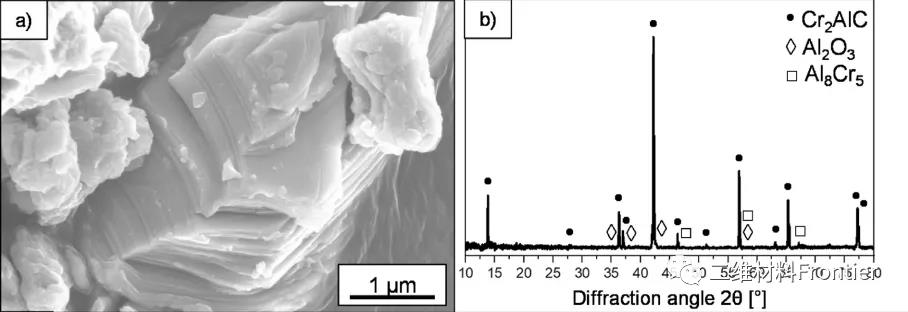
Figure 1. Scanning and XRD patterns of Cr2AlC.
Figure a) is a scanning image of powder particles, Figure b) is an XRD image of Cr2AlC powder.
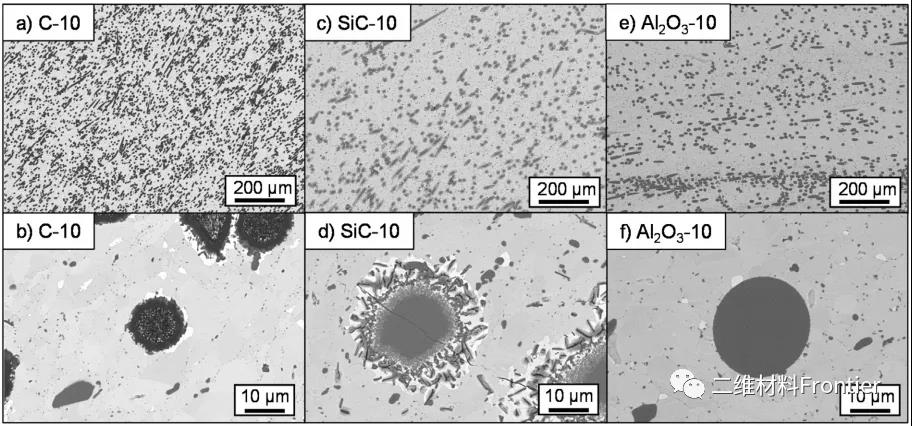
Figure 2. Polished cross-sections of sintered composites at different magnifications.
In the above figure, a) is a composite material containing 10wt%; b) is carbon fiber; Figures c) and d) are silicon carbide fibers; Figures e) and f) are overviews and detailed views of alumina fibers.
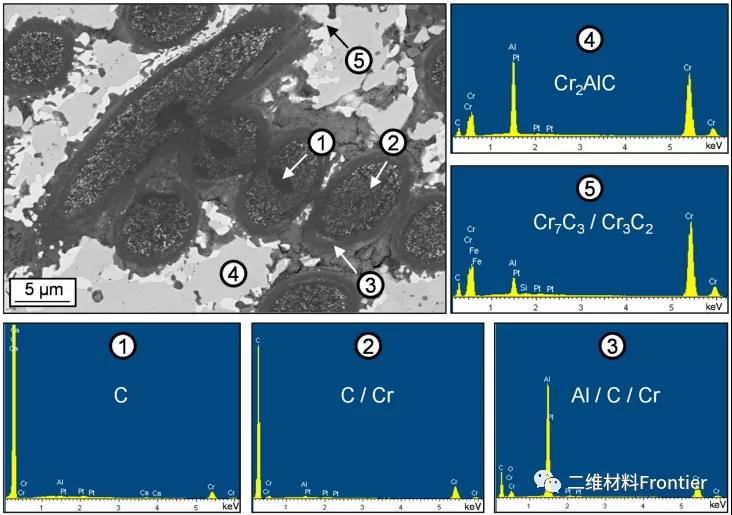
Figure 3. Scanning electron micrograph of C-10 and EDX measurement results.

Figure 4.) Diffraction pattern of Cr2AlC, Al2O3-10, alumina fiber, SiC-10 and silicon carbide fiber.

Figure 5. Application of SNMG-40 film in flexible asymmetric supercapacitors.
As shown in the figure above, you can see the capacitance retention under different bending angles. Insert the above-mentioned device, and the display device can supply power to the LED in the bent state.
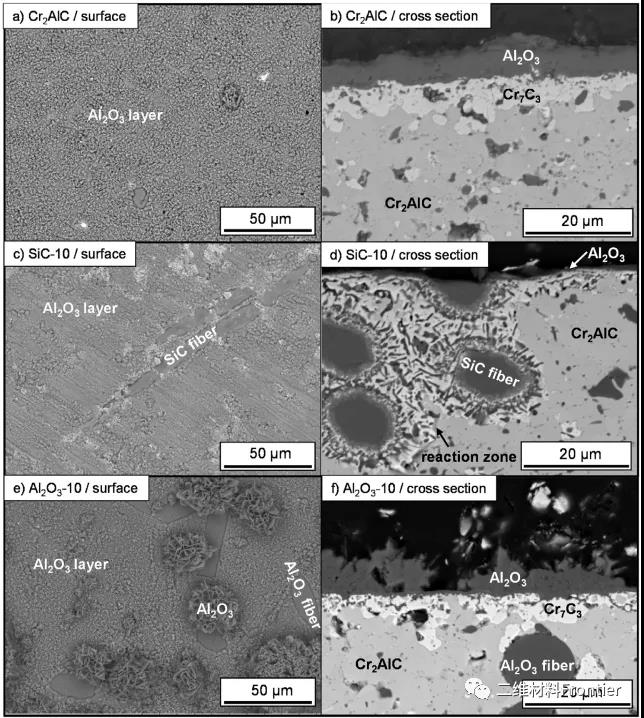
Figure 6. Surface and cross section of a) Cr2AlC, b) SiC-10 and c) Al2O3-10 at 1000°C after 50h.
3. Full text summary
The most important result of this research is the oxidation reaction of Al2O3-10 in a realistic oxidizing environment. The protective, well-adhered alumina layer and C fiber formed at 1200°C for 500 cycles survived this test without any damage or visible particle growth. A Cr7C3 layer is formed under the aluminum oxide layer. In general, the results of this experiment are very promising for the further development of ceramic fiber max phase materials.
18915694570
Previous: Synthesis and Characte